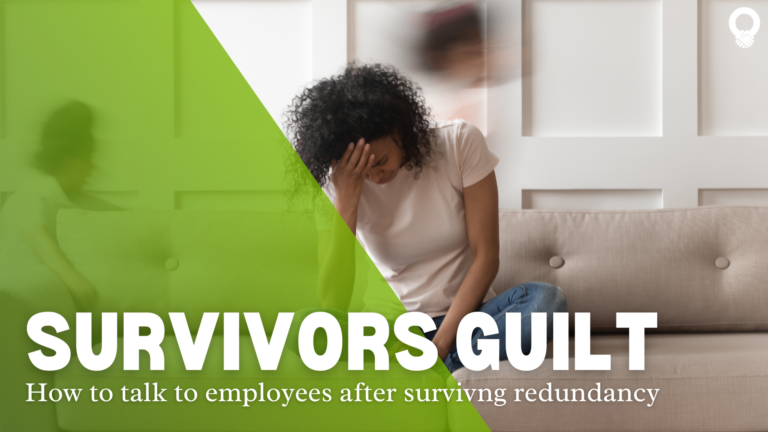
In times of restructuring, redundancies, or economic challenges, employees often experience a range of difficult emotions. Among those who remain employed, a common yet often overlooked issue is ‘survivor’s guilt’. HR professionals play a critical role in addressing this, as it impacts not only individual wellbeing but also team morale and overall productivity.
Understanding Survivor’s Guilt
Survivor’s guilt can manifest in various ways, from disengagement and burnout to anxiety, resentment, or fear of further job cuts. According to the American Psychological Association, almost half of employees who survive layoffs report increased stress levels, which can reduce job satisfaction and engagement. Studies also show that restructuring, and the resulting job insecurity, is linked to burnout and poor mental health.
HR leaders must be proactive in recognising and addressing these emotions to maintain a healthy work environment. Below are several strategies HR professionals can use to support employees through this difficult period.
Acknowledge the Issue
One of the first steps in tackling survivor’s guilt is to openly acknowledge that it exists. Employees may feel reluctant to voice their concerns, worried they’ll appear ungrateful for their job security. HR should create a safe, non-judgmental space for staff to express their feelings.
Encouraging managers to hold one-on-one meetings with employees is an effective way to facilitate these conversations. Listening with empathy and validating their emotions can significantly improve morale. In fact, research shows that when leaders listen effectively, organisations benefit from increased productivity, creativity, and employee engagement.
Provide Clarity and Reassurance
Uncertainty can heighten the effects of survivor’s guilt. Employees might fear more layoffs or feel overwhelmed by an increased workload due to staffing cuts. HR professionals should focus on transparent communication, providing as much clarity as possible about the company’s future direction and recovery plans. While it’s not always possible to give definitive answers, regular updates help to minimise speculation and fear.
Make sure employees understand any new responsibilities that arise from restructuring, and take time to check in if they are feeling overwhelmed. Offering reassurance about job security and explaining the next steps the business will take helps employees refocus on their roles rather than dwelling on uncertainties.
Promote Resilience and Support
HR professionals can mitigate the long-term effects of survivor’s guilt by actively supporting employee resilience. Providing access to mental health resources—such as employee assistance programmes, counselling, or wellbeing workshops—can give employees the tools they need to manage emotional challenges.
Additionally, fostering peer support through initiatives like mentoring or informal check-ins can be hugely beneficial. The World Health Organisation notes that workplaces which actively promote mental health and resilience often see a decrease in absenteeism and burnout. Building this support network within teams ensures employees feel connected and supported through tough times.
Reignite Purpose
Survivor’s guilt can lead employees to feel that their job has become a burden rather than an opportunity. To combat this, HR should work with leadership to help employees reconnect with a sense of purpose in their roles. This can be done by setting clear, achievable goals and highlighting the impact their work has on the company’s recovery.
Gallup research shows that employees who understand how their role contributes to the organisation’s mission are far more likely to stay engaged and committed. By helping employees refocus on the value they bring, HR can shift their attention from the past to the future, renewing their sense of motivation.
To Sum Up
Addressing survivor’s guilt is a complex yet crucial task for HR professionals following organisational change. By acknowledging emotions, providing clear communication, fostering resilience, and helping employees rediscover purpose in their work, HR can rebuild both individual and team strength.
Ultimately, this will help employees feel valued and supported, ensuring the organisation emerges stronger from the challenges it has faced.